
When you are building out a new office or updating an existing space, it is easy to focus on flooring, furniture, and paint colors and leave signage for the last minute. The problem is that your lobby and reception signs are what visitors actually rely on to know where they are, where to go, and how to check in. Planning your signage early in the process helps you avoid confusion, last-minute rush orders, and a finished space that still feels incomplete.
At Eye 4 Group, we help businesses throughout Indianapolis plan lobby signs, reception signage, and ADA-compliant signage that all work together. Here is how to think about your signage during a new office build or remodel.
Start with the Visitor Path, Not Just the Logo
Before you make decisions about materials and finishes, walk through the space like a first-time visitor. Imagine you have never been there before and you are trying to find the right office, clinic, or front desk. Where do you enter the building? What is the first thing you see? Where do you naturally look next?
A good signage plan follows this visitor path. Your lobby sign should reassure people that they are in the right place, and your reception signage should show them where to check in and what to do next. When you start with the visitor experience and work backward, your signs become tools, not just décor.


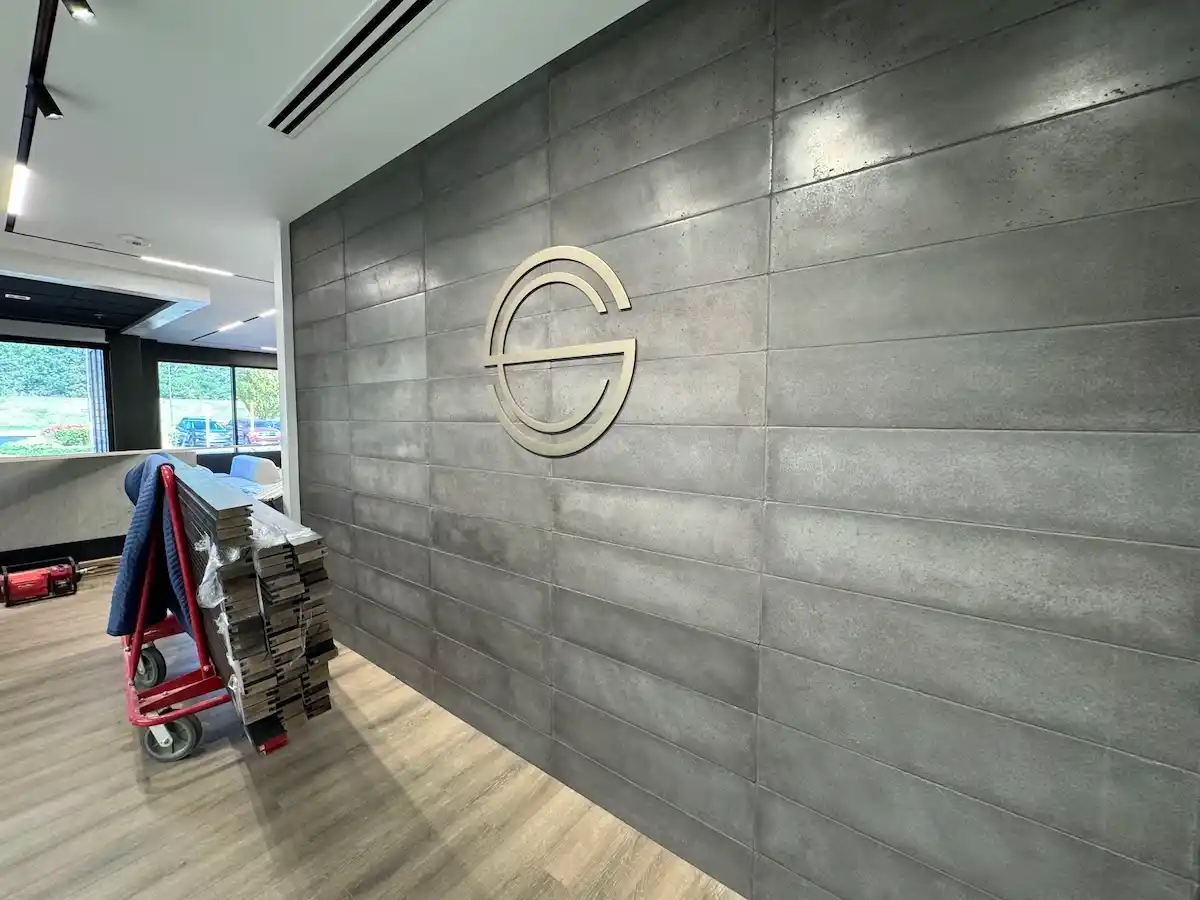
1. A Focal Lobby Sign
The lobby sign is usually the main visual anchor in the entry. It often sits behind the reception desk or on the first wall people see when they walk in. A strong lobby sign confirms they have found the right business, reinforces your brand, and sets the tone for the rest of the visit. This is where custom lobby signs in Indianapolis do a lot of heavy lifting. Dimensional lettering, acrylic panels with standoffs, backlit logos, or layered signs can all be sized to fit your architecture and your brand style, whether you want something sleek and modern or warm and traditional.2. Reception Signage at the Front Desk
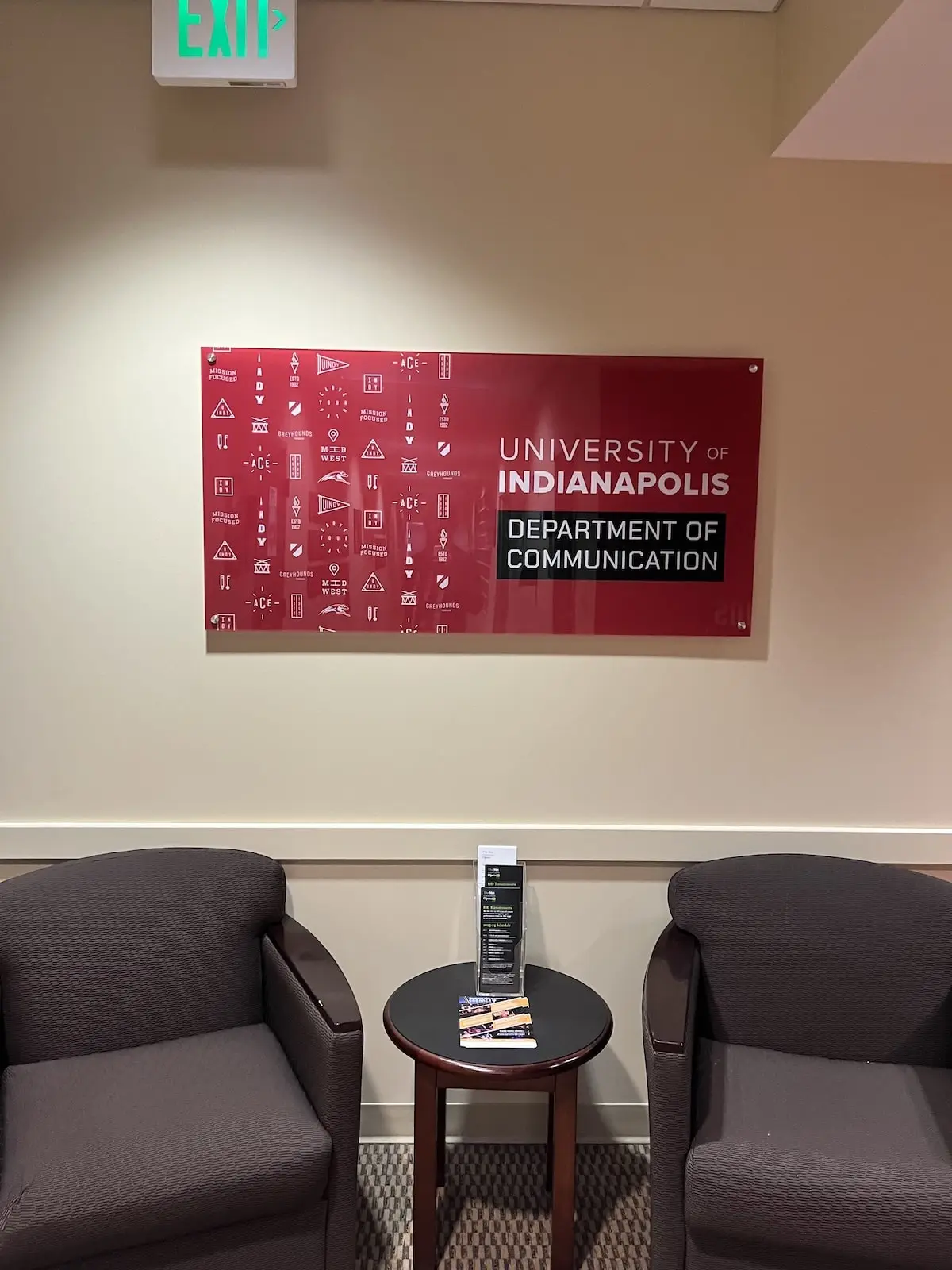
Once visitors know they are in the right building, they need to know where and how to check in. That is the job of your reception signage. Simple messages like “Check in here,” “Please sign in,” or “Wait here for assistance” reduce hesitation and keep the line moving.3. Wayfinding and ADA-Compliant Signs
After check-in, visitors still need help finding conference rooms, restrooms, elevators, or waiting areas. This is where wayfinding and ADA signage come in. Room ID signs, restroom markers, stair and elevator signs, and directional arrows guide people through the rest of the building.These signs are not only practical; they are also required in many cases. ADA-compliant signage uses tactile lettering, Braille, high contrast, and proper mounting heights so people of all abilities can navigate your space safely. Planning these signs at the same time as your lobby and reception signage keeps everything consistent and reduces the risk of costly rework later.
Choosing Materials and Finishes That Fit Your Space
Once you know what signs you need, you can focus on how they should look and feel. Your lobby and reception areas should match the rest of your interior design, not fight against it. If your space has glass walls, polished floors, and modern furniture, acrylic and metal often make sense. If you are working with warm wood tones and softer finishes, a combination of wood, painted elements, and subtle metal accents may be a better fit. The key is consistency. Your lobby sign, reception desk graphics, and ADA signs do not have to be identical, but they should clearly belong to the same family. Color matching, font choices, and a shared material palette go a long way toward making the space feel intentional.When to Bring Your Signage Partner into the Project
One of the biggest mistakes people make during a new build or remodel is waiting until the very end to think about signage. By that point, walls are already finished, electrical work is done, and there is little flexibility left for installing larger features like backlit lobby signs or recessed panels. It is much more effective to bring in a signage partner early, while you are still looking at floor plans and elevations. That gives time to coordinate power for lighting, confirm wall types and mounting details, and make sure key sightlines are not blocked by fixtures or furniture. It also spreads out decisions so you are not trying to choose every sign in the building during the last week of the project.Putting It All Together for Your Indianapolis Space
A well-planned signage package is one of the simplest ways to make a new office or remodel feel finished. A clear lobby sign gives visitors confidence the moment they walk in. Clean, well-placed reception signage keeps traffic flowing at the front desk. ADA-compliant and directional signs make the rest of the building easier to navigate for everyone.
If you are planning a new space or updating an existing one in Central Indiana, now is the time to think through your signage. Explore your options for lobby signs in Indianapolis, reception signage, and ADA-compliant signage, and build them into your project plan instead of bolting them on at the end. Your visitors, your staff, and your brand will all benefit from a space that looks good and functions well from the first day you open the doors.
"*" indicates required fields
Eye 4 Group, LLC
Eye 4 is an Indianapolis creative venture focusing on visual solutions branding, marketing, and promotional, signage, fabrication, and project management.